Homeopathy
First Aid for Baby
Course Content
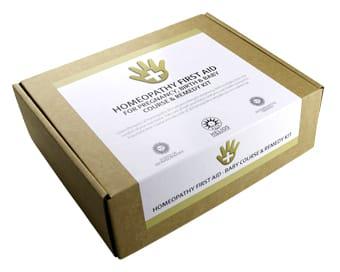
The Homeopathy First Aid for Baby Course (and remedy voucher) comprises:
- Study of homeopathic philososphy and methods
- Study of acute and first aid treatments for pregnancy, birth and baby
- Pregnancy, birth and baby use of homeopathic medicines
- Self-assessment questions and cases
- Tutor assessment and certification
- Memory stick of lectures on homeopathy and remedies
- Three booklets of homeopathic philosophy and medicines
- Voucher for additional homeopathic study
- Helios homeopathic pharmacy voucher for remedies
- 30g tube of Calendula cream
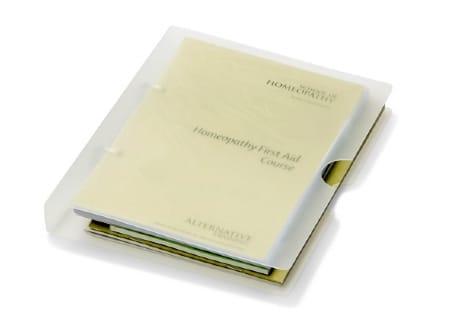
The course
Here is a quick overview of each of the main sections, greater detail is given below.
Part 1 Introduction
This gives you a brief overview of homeopathy, its history and its development.
Part 2 Homeopathic principles
This explains the basic principles of classical homeopathy, so that you can understand the philosophy underpinning its application and what healing outcomes to expect.
Part 3 First steps to using homeopathy
We introduce a commonly used remedy for you to start using straightaway, prior to undertaking your main study.
Part 4 Case receiving and prescribing guidelines
This gives you guidelines on receiving the case, assessing symptoms and finding the most appropriate remedy (prescribing).
Parts 5, 6, 7 and 8
Here we look at the different conditions and problems which can crop up in Pregnancy, during Labour, after the birth and in the newborn baby during those first few weeks of life and how to find appropriate homeopathic remedies. To help you learn more about homeopathy and casework we have included sample cases at the end of each Part.
Part 9 Self Assessed Cases
Here, under the heading for the appropriate part (5-8) are some self-assessment questions, so you can have a go yourself and check your understanding with our answers in the course ‘Answers’ section. You can either work through these at the end of each Part, or you can wait until you have completed all of the Parts 5 – 8 and then do them all together as you prefer.
Answers
This section holds all the answers to the self-assessment questions and cases and should not be looked at until you have attempted the questions yourself first.
Assignments
Once you have worked through the course, having completed all of the self-assessment questions, watched movie lectures and read the books, you will be ready to tackle the assignments. These are optional.
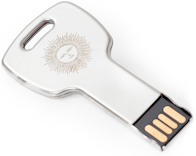
Course Memory Stick
The memory stick provides a important part of the learning. It is divided into nine sections to fit with the nine parts of the course. The movie chapters follow most of the course sections, so you can watch the relevant chapter as you work your way through the course.
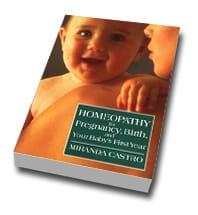
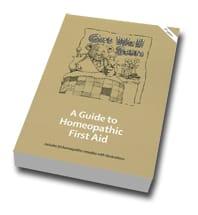
Course books
Homeopathy for Mother and Baby, by Miranda Castro
Here you will find a wealth of self help information as well as detailed information on a large number of remedies appropriate to this stage of life. There will be frequent references to this book during the course and it will be an invaluable reference for prescribing.
Get Well Soon, by Misha Norland and students of the School of Homeopathy
This little gem of a book is perfect for getting started in homeopathy and as a quick reference guide to acute and first aid homeopathy. It is fantastic for helping you deal with accidents and common ailments at home quickly, safely and effectively. It will become your main reference for prescribing and should be kept with the remedy kit.
Homeopathy, A Rational Choice in Medicine, by Mo Morrish
This book will help you learn more about homeopathy and how it stacks up against modern mainstream western medicine. It helps to dispel some of the myths surrounding homeopathy, enabling you to make more informed decisions about healthcare.
Tutor marking
The fee for assessment and certification is included in the price of the course. Successful completion leads to the The School of Health and the School of Homeopathy's ‘Homeopathy First Aid’ certificate.

Homeopathic Cream
Calendula 30g cream
Homeopathic Remedy Voucher
A Helios Homeopathic Pharmacy Voucher, worth £35, is included with the complete course, you can redeem the voucher for all the remedies that accompany this course from Helios. The remedies are listed below, by the end of the course you will be familiar with all of them!
Aconite
Antimonium tartaricum
Apis
Arnica
Arsenicum album
Belladonna
Bellis perennis
Bryonia
Calcarea carbonica
Calendula
Cantharis
Carbo vegetabilis
Caulophyllum
Chamomilla
Chelidonium
Chinchona officinalis
Cimicifuga
Gelsemium
Hypericum
Ignatia
Ipecacuanha
Kali carbonica
Kali phosphoricum
Lachesis
Lycopodium
Magnesium Phos
Mercury
Natrum muraticum
Nux vomica
Phosphorus
Phytolacca
Pulsatilla
Secale
Sepia
Silicea
Staphisagria
Additional Vouchers
Great savings! The pack comes with a School of Homeopathy voucher, worth £75.00, and can be redeemed against further study.
Full course content
Welcome & Guidelines
Introduction
Part 1
1.1 The history of homeopathy
1.2 Hahnemann and the first principles
1.3 Glossary of commonly used terms in homeopathy
Part 2
2.1 A homeopathic view of health
2.2 Levels of being within totality
2.3 Acute and chronic disease
2.4 Self-healing and the vital force
2.5 Exciting causes
2.6 Law of similars
2.7 Susceptibility
2.8 Suppression
2.9 Pharmacy
2.10 Minimum dose
2.11 Single dose
2.12 Provings
2.13 Other ways of finding information
2.14 Direction of cure
2.15 A final note
Part 3
3.1 First steps – using Belladonna homeopathically
Part 4
4.1 Acute case analysis
4.2 Symptom categorisations
4.3 Receiving the chronic case - an overview
4.4 Receiving the acute case
4.5 Acute case examples
4.6 Taking the remedy
4.7 Dosage and repetition
4.8 What changes can be expected after taking the remedy?
4.9 What about aggravations?
4.10 The appearance of ‘new’ symptoms during treatment
4.11 When is the remedy changed?
4.12 Is homeopathy safe? Are there side-effects?
4.13 Cautionary guidelines
Part 5
5.1 Pregnancy
5.2 Pregnancy - Digestion
Morning Sickness
Heartburn
Constipation
5.3 Pregnancy - Aches and Pains
Sacro-iliac
Symphisis pubis pain
Carpal Tunnel Syndrome
Cramp
5.4 Pregnancy – Urinary problems
5.5 Pregnancy - Anaemia, faintness, dizziness
5.6 Pregnancy - Varicose veins and Haemorrhoids (Piles)
Varicose Veins
Haemorrhoids (Piles)
5.7 Pregnancy - Sleep problems
5.8 Pregnancy – Cholestasis
5.9 Pregnancy - Hypertension, oedema, pre-eclampsia
5.10 Pregnancy - Vaginal discharge and itching
5.11 Pregnancy - Bleeding and Miscarriage
5.12 Pregnancy - Unusual position of baby such as breech, transverse etc
Case Examples
Part 6
6.1 Birth
6.2 Birth - Premature Labour
6.3 Birth - Delayed labour – late for dates
6.4 Birth - Prolonged pre-labour or false labour
6.5 Birth - Contractions
6.6 Birth - Failure to progress, slow labour, difficult contractions
6.7 Birth - Rapid labour
6.8 Birth - Trembling
6.9 Birth - Vomiting in labour
6.10 Birth - Third stage
Retained placenta
Post Partum Haemorrhage
6.11 Birth - Drugs – side effects
Case Examples
Part 7
7.1 Puerperium
7.2 Puerperium - After pains and sub-involution
7.3 Puerperium - Bruising and tissue trauma
Coccyx pain
After effects of catheters, urinary problems
Prolapse
7.4 Puerperium - Caesarian section
7.5 Puerperium - Other problems
Phlebitis
Post Partum Infection
7.6 Puerperium - Breast feeding
Sore and cracked nipples
Inverted nipples
Engorgment
Supply problems – not enough or too much milk
Blocked ducts
Mastitis
7.7 Puerperium - Post natal blues
Case Examples
Part 8
8.1 New Born Baby
8.2 New Born Baby - post delivery
8.3 New Born Baby - Sleeplessness and Crying
8.4 New Born Baby – Digestive Problems
Colic
Vomiting
Constipation
8.5 New Born Baby - Neonatal jaundice
8.6 New Born Baby - Eye discharges
8.7 New Born Baby – Thrush & nappy rash
Case Examples
Part 9
9.1 Self Assessment
Three remedies in-depth
Caulophylum
Cimicifuga racemosa
Pulsatilla
Answers
Self-assessment questions A-M
Self-assessment cases
Assignments
Guidelines
Questions
Forms
Your views